



Soviet Su-27P "Flanker-B" fighter
It is a single-seat dual-engine all-weather air superiority heavy fighter developed by the Soviet Union's Sukhoi Design Bureau, and belongs to the third-generation fighter. It is the early production model of the Su-27 series, and its main tasks are territorial air defense, escort, and maritime patrol. Using the wing-body fusion technology, the cantilever type has a single wing, a smooth curved forward wing outside the wing root, a normal layout of double vertical tails, and a wedge-shaped inlet located at the front and lower part of the wing-body fusion, with good aerodynamic performance. Although gradually replaced by more advanced fighters over time, it still has an important place in aviation history and is an iconic aircraft in the history of Soviet military aviation.

Soviet Su-15TM Interceptor
It is a two-engine all-weather high-speed interceptor developed by the Soviet Union's Sukhoi Design Bureau in the 1960 s. It is an improved model of the Su-15 series and is codenamed "Flagon-F" by NATO ". Designed to intercept and destroy high-altitude, high-speed intruders, such as enemy bombers and reconnaissance aircraft. Design features include larger wingspan and height, as well as aerodynamic improvements to improve handling and landing performance. Despite its technical success, the model was eventually phased out around 1993 due to funding problems following the collapse of the Soviet Union and the advent of more advanced aircraft such as the MiG-31 and Su-27.

Soviet Su-27 "Flanker-B" fighter
It is a heavy multi-role fighter developed by the Soviet Sukhoi Design Bureau in the 1970 s to compete with the American F-15 "Eagle. Served in 1985 and became one of the main fighters of the Soviet Air Force. The design emphasizes air superiority, with excellent maneuverability and long range, suitable for performing multiple tasks. The design made it an important air power during the Cold War and served in the air forces of many countries, including China, India and Ukraine. Over time, the Su-27 series has also spawned a variety of improved and export models that continue to play a role in modern air combat.

Soviet Union Su-24MK FencerD Bomber
It is a two-seater, double-engine swept-wing fighter-bomber developed by the Soviet Union's Sukhoi Design Bureau. It is an export model of the Su-24 series. Compared with Su-24M in performance, it is mainly for the international market and exported to Iran, Iraq, Libya and Syria. It has all-weather combat capability and is capable of carrying nuclear and regular weapons. The power system provides supersonic flight capability for two AL-21F turbojet engines. It is also equipped with advanced navigation/attack radar and terrain avoidance system, enabling it to break through at low altitude and high speed. It also has the ability to refuel in the air, increasing the combat radius and mission flexibility.

Soviet Su-27 "Flanker" heavy fighter (green camouflage)
It is a single-seat dual-engine all-weather air superiority heavy fighter developed by the Soviet Union's Sukhoi Design Bureau. It belongs to the third-generation fighter. The design began in 1969 and was developed to counter the American F-15 "Eagle" fighter. It is known for its excellent mobility, high-speed performance and long-range combat capability. Using the wing-body fusion technology, the cantilever type has a single wing, a smooth curved forward wing and a double vertical tail normal layout. The fuselage is made of a large number of titanium alloys, with a four-degree fly-by-wire control system, no mechanical backup, and a static and unstable design. It is still an important asset of the air forces of Russia and many other countries.

Soviet Su-27 "Flanker" heavy fighter (blue camouflage)
It is a single-seat dual-engine all-weather air superiority heavy fighter developed by the Soviet Union's Sukhoi Design Bureau. It belongs to the third-generation fighter. The design began in 1969 and was developed to counter the American F-15 "Eagle" fighter. It is known for its excellent mobility, high-speed performance and long-range combat capability. Using the wing-body fusion technology, the cantilever type has a single wing, a smooth curved forward wing and a double vertical tail normal layout. The fuselage is made of a large number of titanium alloys, with a four-degree fly-by-wire control system, no mechanical backup, and a static and unstable design. It is still an important asset of the air forces of Russia and many other countries.

Sukhoi Su-27 fighter jet
It is a twin engine supersonic and super maneuverable fighter designed by the Soviet Sukhoi Design Bureau. Competing with the fourth generation large jet fighters of the United States such as the Grumman F-14 Tomcat and the McDonnell Douglas F-15 Eagle, it has a combat radius of 3530 kilometers, carries heavy aviation weapons, is equipped with cutting-edge avionics, and has excellent maneuverability. Originally designed for air superiority missions, subsequent derivative models were able to perform almost all types of air combat missions. Complementing the MiG-29 fighter design of the Mikoyan Design Bureau, they jointly formed the main fighter squadron of the Soviet Union and later the Russian Air Force

Popular Models

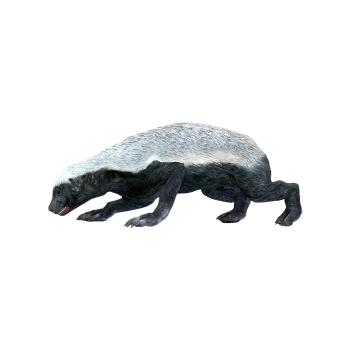
Honey Badger (3D animated model)
194 View
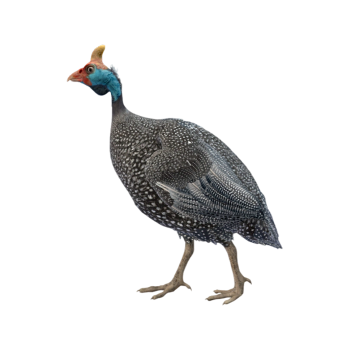
Guinea fowl (3D animated model)
165 View
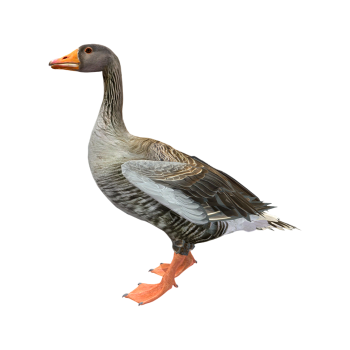
Wild Goose (3D animated model)
187 View
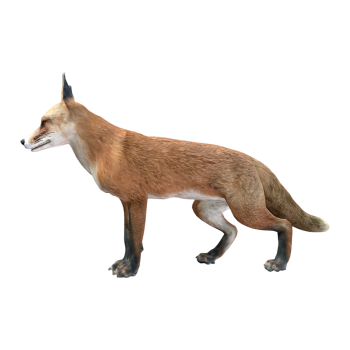
Red Fox (3D animated model)
155 View
Random Model
Bedroom bedding
566 View


Seagull 3D model with animation
1129 View

Porsche 924 Carrera GTR sports car
1211 View

Red rhinoceros tortoise
653 View

baguette
910 View

power station
920 View


Sony WH-H800 Day Green
884 View

Border Collie
1030 View